
Quality control of AR/VR displays for homogeneity, contrast, angle dependency and color fidelity
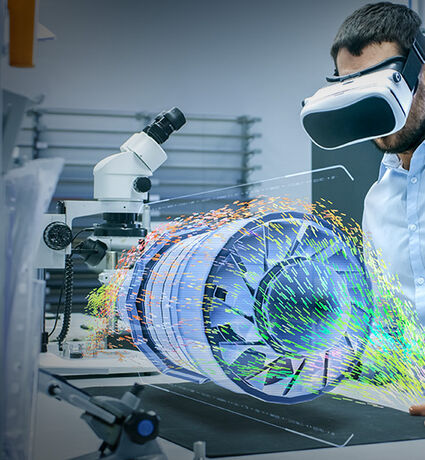
Head-mounted displays (HMD) project a computer-generated image. The wearer is immersed in a virtual world (virtual reality) or receives additional information (augmented reality) superimposed on the real image. These HMDs produce a virtual image, which must be tested by using specific optics mimicking the human eye.
AR/VR devices are used in various fields of applications. For example, AR/VR glasses may be used to assist machine operation in production, in the medical field, transport industry or the entertainment branch.
Display or calibration errors distract from the wearer’s sense of immersion in the virtual world. In quality assurance they must be reliably recognized and evaluated. This opens up a new and exciting field for display measurement subject to constantly changing demands on the technology.
Accurate and reliable display metrology is necessary for:
- calibration of AR/VR devices
- recognition of image defects
- development of new AR/VR technology
The challenges: Large field of vision, near-to-eye displays
The displays of immersive VR devices generate images in an extremely broad field of vision. Today some VR glasses cover the entire horizontal field of view of the human eye. To enable realistic measurements, an imaging system must therefore capture all areas of the virtual image.
The close proximity of the display to the eye also magnifies display defects, making them more prominent to the wearer. At the same time, the resolution of these displays is constantly increasing, with the aim of creating an illusion that is as near as possible to reality. To ensure reliable results, measuring instruments require excellent resolution, if possible at pixel level.
The more similar the measuring instruments mimic the human eye, the better the entire field of vision and the relevant defects can be recognized.
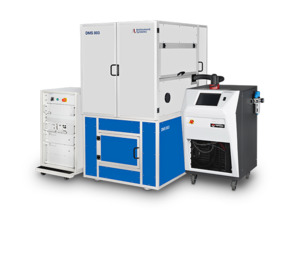
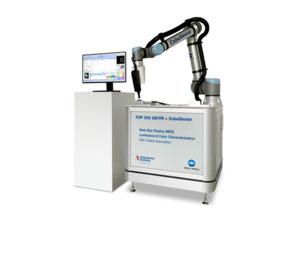
Our solutions: DMS goniometer and LumiTop – two established measuring systems for innovative AR/VR applications
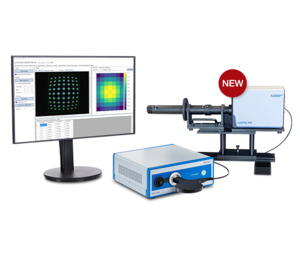
These DMS display measuring systems are based on the CAS series of high-end spectrometers from Instrument Systems. They are automated all-in-one systems that emulate the human perception system by angle- and time-resolved measurement with a degree of precision that is virtually unrivalled on the market. They can be equipped with custom optics and extensive accessories, e.g. to simulate ambient lighting and temperature. Software tools are available for AR/VR applications, e.g. eye box mapping and flicker.
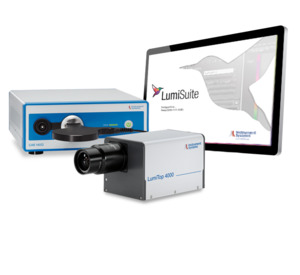
The LumiTop measuring system in combination with a CAS spectrometer is one of the few 2D color measuring systems available on the market with spectroradiometric accuracy and extremely short measuring times. Since many years the LumiTop system is an integral part of the assembly lines of some of the biggest display manufacturers with more than 10,000 systems in the field. For use in the measurement of AR/VR displays, the successful concept was supplemented by specific straight and periscopic AR/VR lenses for tests on headset as well as on module level. We offer a high resolution sensor with an aspect ratio optimized for typical AR/VR applications.
We will be pleased to provide advice for your planning in order to configure the ideal measuring concept.
What is your individual challenge? Together we will find the right solution – just ask us!
1. What are the important quantities to characterize a virtual image?
The key quantities are brightness, color, luminance, uniformity, contrast, sharpness, and distortion. These parameters determine the visual quality of the virtual image and the overall user experience.
2. What are the differences between an imaging colorimeter for display testing and an imaging colorimeter for near-eye display testing?
A display testing imaging colorimeter is typically optimized for flat-panel screens viewed from a standard distance. A near-eye imaging colorimeter must be designed for AR/VR applications, where the image is viewed very close to the eye, often across a wide field of view and with much higher resolution and sharpness demands.
3. What does a measurement setup for, e.g., AR glasses using an imaging colorimeter look like?
A proper setup requires precise alignment between the AR/VR device or near-eye display and the imaging colorimeter. To achieve this, either the device or the colorimeter is typically mounted on a mechanical system that allows translation and rotation. Depending on the intended measurements, a more advanced setup may be needed to support all required movements, for example for eye box measurements or eye gaze measurements.
4. What should I consider when selecting an imaging colorimeter for virtual image measurements?
When selecting an imaging colorimeter for virtual image measurement, it is important to match the system to the properties of the AR/VR device, such as field of view, virtual image distance, and resolution. The colorimeter should be able to measure within these parameters with the required accuracy and image quality. In addition, the size and shape of the measurement optics should be suitable for the device design. For example, some VR headsets have a head strap or housing that can interfere with the lens position. In such cases, a periscopic lens design can help avoid collisions and enable reliable measurement.
5. Are there standards describing how to measure near-eye displays?
There are several standards that cover the characterization of AR/VR devices. Here is a brief overview:
- IEC 63145-10:2023
- IEC 63145-20-10:2019
- IEC 63145-20-20:2019
- IEC 63145-21-20:2022
- IEC 63145-22-10:2020
- IEC 63145-22-20:2024
- ISO 9241-333:2017
- ICDM